
After more than 30 years working in the technology industry, at 52 years of age, I find myself learning all over again. Not because I've forgotten what I know, but because the rules are changing so dramatically that I have had to reconsider some of the things I've taken for granted throughout my career, particularly how we use technology to help businesses solve their problems.
And I have to admit, it's both exciting and a little uncomfortable.
For decades, I've watched businesses make expensive compromises when choosing their software. Investing in off-the-shelf systems that promise to transform their operations, only to discover that their people must change the way they work because the software does not accommodate their actual business processes. They end up with spreadsheets filling the gaps, manual workarounds, expensive integrations and employees spending more time satisfying the system than doing their jobs.
The software industry has largely accepted this as the norm, and for a long time so have our customers. Custom-built software was considered expensive, complicated and something only companies with substantial IT budgets could realistically afford.
I no longer believe that argument holds. And I think much of the software industry is going to have a difficult time accepting what comes next.
The problem is not the software. It is the thinking behind it.
When a business approaches a software supplier, the conversation usually starts with something like "what kind of software are you looking for? A CRM? An ERP? A warehouse management system?"
From that moment, the discussion revolves around products, features, licences and implementation costs, rather than what the business is actually trying to accomplish.
Why are we asking businesses what software they need when we should be asking them what problems they have?
A company struggling to manage customer relationships doesn't necessarily need another CRM. It might need better commercial processes, faster quotations, improved communication between departments or simply a more intelligent way of managing information. Understanding those problems, questioning existing processes and designing the right solution requires something far more valuable than programming skills: genuine business understanding.
This has always been important, but the technological revolution we are experiencing is making that distinction impossible to ignore.
Code is becoming cheap. Intelligence is not.
Let us address the elephant in the room. AI-assisted development is dramatically changing the economics of producing software, and when combined with experienced engineers, proven architectures and reusable technical components, it can make the development of tailored business applications substantially more efficient.
Yet much of the industry continues to operate as though every project needs to be built from the ground up, with hundreds or thousands of development hours justifying the invoice.
I would argue that customers should increasingly question that model. If technology allows us to deliver a reliable solution with significantly less effort, shouldn't businesses share in the benefits?
And no, I am not suggesting that anyone with an AI tool can suddenly build secure, scalable, enterprise-grade software. Architecture, engineering discipline, integration, testing and long-term maintainability still matter enormously. But that is precisely my point: the real value is moving away from producing code and towards understanding, designing and engineering the right solution.
The ability to write code is becoming less scarce. The ability to understand a business and translate its objectives into an effective technological solution isn't.
Custom software is no longer an enterprise luxury.
Here is where the real disruption begins, particularly for medium-sized companies.
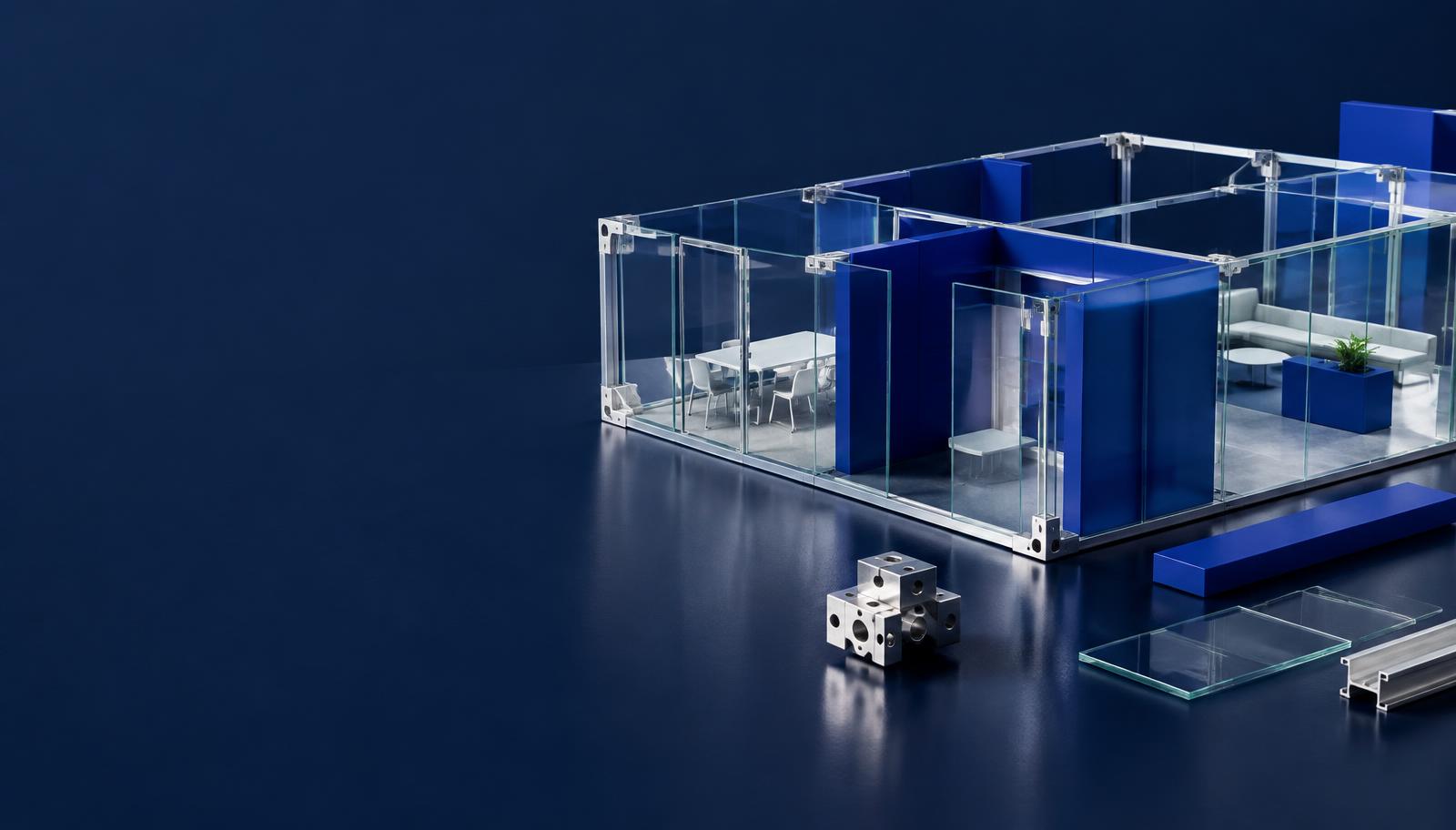
Instead of purchasing a rigid product and spending months adapting their business to its limitations, companies can increasingly start with a proven software architecture containing the common technical foundations, then have an application developed specifically around their workflows, commercial rules and operational requirements.
This is not about taking a generic CRM and changing a few screens. Nor is it about building everything from scratch. It's about reusing what makes technical sense and developing what makes the business unique.
The architecture is reusable. The business solution is individual.
For the first time, many businesses that previously could not justify custom development can seriously consider software that reflects how they actually operate.
And that is a much bigger revolution than simply making programmers more productive.
Of course, established software products still have their place, and building custom software isn't always the best commercial decision. But the automatic assumption that tailored software is prohibitively expensive deserves to be challenged.
Perhaps the software industry is selling the wrong thing.
I suspect some software companies will be uncomfortable with this argument, particularly those whose business models depend on selling development hours, licences and increasingly complicated customisation projects. But technology does not stop evolving to protect established revenue models.
I am more convinced than ever, after three decades in technology, that the future belongs to companies that sell business understanding, intelligent solution design and measurable results, rather than simply software development capacity.
We need to stop asking businesses, "What software do you need?" and start asking, "What problems are you trying to solve, and what do you want to achieve?"
Because the real disruption is not that AI can write code. It's that businesses can finally start demanding software that works for them, instead of the other way around.
And perhaps it is time the software industry caught up.
But I could be wrong. Let's discuss it!
At 52, I am questioning assumptions I've held for much of my professional life, and I certainly don't pretend to have all the answers. What I do believe is that we are witnessing a fundamental shift in the economics and value of software development, and that the implications go far beyond AI making programmers more productive.
So I'd genuinely like to hear your perspective. Are we witnessing the democratisation of custom software, or am I underestimating the complexity and cost of building truly tailored solutions? Is the traditional software development model becoming obsolete, or does it still offer value that AI-assisted engineering cannot replace?
Whether you're a developer, a software company owner or a business leader who's had to adapt your processes to fit your software, I'd particularly welcome views that challenge mine.
I suspect this is a conversation our industry needs to have.
Disagree with me? Even better. Tell me why!
Mário
The 52-year-old freshman
What is your perspective?
Discuss your software challenge